Buying a used car can feel like negotiating in fog. A polished exterior may hide worn tires, overdue maintenance, or previous collision repairs. This guide explains how to check if a used car is overpriced before you commit your money.
The process combines practical inspection, market research, and careful questioning. Compare the vehicle with similar listings by year, trim, mileage, location, and condition. Review the VIN history, service records, ownership details, and reported accidents. A low price is not always a bargain. An unusually clean vehicle may still carry mechanical risks.
Look closely.
A cold engine should start smoothly, without heavy smoke, loud knocking, or warning lights. Check uneven panel gaps, mismatched paint, cracked rubber, fluid leaks, and tire wear. Then arrange an independent inspection, even if the seller seems trustworthy. A qualified mechanic can identify suspension noise, brake wear, leaks, and hidden damage that photographs cannot show.
When asking how to check if a used car is overpriced, include every cost. Registration, insurance, repairs, financing, and replacement tires can change the real value. Online price tools are useful, but they may lag behind local demand or overlook condition. I have found that a vehicle’s history often matters more than its attractive listing price. Still, no checklist is perfect. Seller descriptions can be incomplete, and inspection results can involve judgment. Use several reliable sources, document each finding, and leave room to walk away. The best deal is not merely the cheapest car. It is a vehicle whose condition, history, and total cost make sense together.
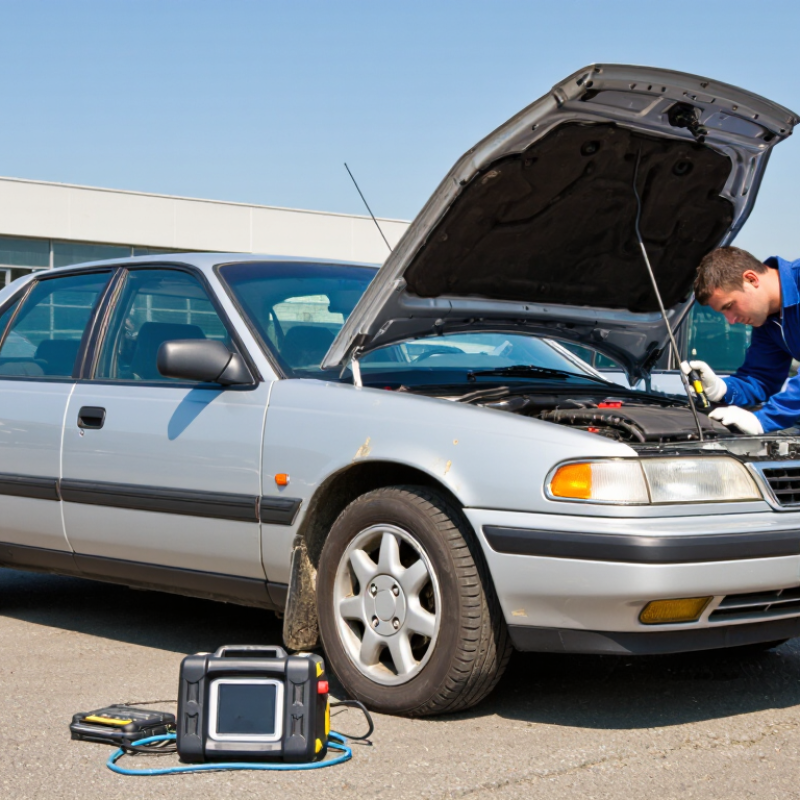
Fair market value is not the seller’s asking price. It is the price a similar car should reasonably achieve in your local market. Compare at least five listings with the same model year, engine, trim, mileage, and drivetrain. Adjust for a clean service history, new tires, accident records, and missing options. A car with 72,000 miles should not be compared directly with one showing 38,000 miles. That mistake is common.
Use the U.S. Bureau of Labor Statistics Consumer Price Index as market context. Its December 2024 data showed used cars and trucks were 3.3% cheaper than a year earlier. FRED, which republishes the same public economic data, also shows that used-car values change over time. Therefore, an older valuation may overstate today’s fair price. Check current local listings, not only national averages. Add sales tax, registration, dealer fees, and immediate repairs before deciding. A $17,500 listing can become $20,000 quickly.
I also recommend an independent inspection. A rough idle, uneven tire wear, or a damp trunk can reduce value more than online calculators show. Be careful here. My first estimate is often too optimistic when I ignore repair costs. Deduct documented expenses from comparable prices, then negotiate around evidence, not emotion. Fair value should leave room for uncertainty.
This illustrative valuation example starts with a $20,100 comparable-market benchmark and adjusts it for mileage, vehicle condition, accident history, and local demand. A fair market value of approximately $17,900 is estimated after the adjustments. Compare this figure with the seller’s asking price to identify a possible overpricing risk.
A used car can look polished and still be overpriced. I inspect it in daylight, on level ground, with a cold engine. Paint that changes shade between panels may indicate repairs. Check door gaps, tire wear, glass markings, and fluid leaks. Inside, worn pedals and a sagging seat can contradict a low odometer reading. I once trusted a clean cabin too quickly. That was a mistake.
A vehicle history report is useful, but it is not complete. Match its mileage with service invoices, inspection records, and registration dates. Ask why ownership changed often. Confirm accident repairs, flood exposure, and unresolved safety recalls through reliable records. A careful seller should allow an independent mechanic to scan the car and lift it. Refusal is information. Test-drive over rough pavement, during braking, and at highway speed. Listen for humming, clunks, and delayed shifting.
Tips: Compare total costs, not only the advertised price. Include dealer fees, registration charges, recent repairs, and transportation costs. Study clear photos closely. Uneven panel gaps, worn seats, or mismatched tires can reduce real value. Ask for service records and confirm the mileage. An independent inspection is often worth the expense.
I once judged a used car by its clean interior and low mileage. My estimate was too optimistic. The tires were nearly worn out, and the brake work was overdue. Local listings helped me correct the price, but they were not perfect comparisons. One car had a stronger maintenance history, while another had accident repairs. Adjust your comparison for condition, ownership history, and included equipment. A fair price is usually near the local middle range, not automatically the cheapest listing.
A used car can look affordable until repairs, mileage, and depreciation change the calculation. I begin with the vehicle’s actual condition, not the seller’s asking price. A pre-purchase inspection from an independent mechanic often reveals worn brakes, leaking fluids, weak batteries, or uneven tire wear.
Write down every repair and obtain realistic local estimates. If immediate work costs $1,800, subtract that amount from the car’s fair market value. Add a small reserve for uncertain problems. I usually allow 10% to 15%, because repair quotes are not perfectly predictable. This part is easy to underestimate.
Mileage also affects value, but not in isolation. A well-maintained car with 110,000 miles may be safer than a neglected car with 75,000 miles. Compare at least five similar listings with matching age, mileage, body style, and equipment. Then examine depreciation. Many vehicles lose value faster during their early years, while older vehicles may decline more slowly. Service history can soften that loss, but it cannot erase heavy wear.
Do the math carefully. Still, the math may be imperfect. A clean interior, cold-start behavior, accident repairs, and missing maintenance records can change the judgment. I once saw a low-mileage vehicle priced attractively, but its overdue suspension work removed most of the apparent savings. A fair offer should reflect today’s repairs and tomorrow’s resale risk.
2026 Best Guide: How to Check If a Used Car Is Overpriced?
Negotiate or Reject the Deal Based on Total Value
A used car’s price is only one part of its value. I compare the asking price with mileage, age, maintenance records, accident history, tire condition, and local market listings. A low price can hide worn brakes, delayed servicing, or expensive repairs waiting nearby. Request the vehicle history and inspect every document carefully. Missing records are not proof of a problem, but they deserve a lower offer.
Take the car to an independent mechanic before negotiating. Ask for a written inspection, including estimated repair costs and safety concerns. Add these costs to the purchase price, then include insurance, registration, fuel use, and routine maintenance. That is the real ownership cost. A car needing $2,000 in immediate work is not a bargain if similar cars need only $700.
I once focused too heavily on a clean interior and overlooked uneven tire wear. The mistake was expensive. Use that lesson. Set a maximum total budget before meeting the seller. Present evidence calmly, not emotion. Offer a fair amount based on verified defects and likely expenses. If the seller refuses an inspection, hides records, or demands a rushed decision, walk away. There will be another car.
A practical comparison framework for evaluating the purchase price, ownership costs, vehicle condition, and negotiation position.
| Evaluation Dimension | What to Check | Illustrative Benchmark | Sample Finding | Estimated Value Impact | Recommended Action |
|---|---|---|---|---|---|
| Comparable Market Price | Compare at least five similar vehicles by model year, body type, mileage, condition, transmission, and location. | Use the median asking price rather than the highest listing. | Median comparable price: $18,200; seller price: $19,900. | Approximately $1,700 above the comparison median. | Negotiate toward the adjusted market range or reject the deal if the seller will not justify the premium. |
| Vehicle Age | Confirm the first registration date and compare the vehicle with others of the same production year. | A one-year age difference can materially affect resale value, insurance, and remaining coverage. | Vehicle is one year older than most comparable listings. | Potential adjustment: −$500 to −$1,200, depending on the segment and condition. | Request a price reduction unless the vehicle has unusually strong equipment or maintenance records. |
| Mileage | Check odometer consistency against service invoices, inspection records, and wear on the steering wheel, pedals, and seats. | Typical annual driving is often around 12,000–15,000 miles, but local usage patterns vary. | Mileage is 25,000 miles above comparable vehicles. | Potential adjustment: −$800 to −$2,000. | Obtain a documented service history and negotiate for accelerated wear and future maintenance. |
| Accident and Title History | Verify title status, reported collisions, structural damage, flood exposure, airbag deployment, and odometer events. | A clean title and no structural damage generally support a higher resale value. | One repaired collision is disclosed; paint thickness differs across two panels. | Potential adjustment: −$1,000 to −$3,000, depending on repair quality and severity. | Require an independent body inspection. Reject if structural or flood damage is suspected. |
| Mechanical Condition | Inspect engine, transmission, brakes, suspension, steering, cooling system, exhaust, and warning lights. | A pre-purchase inspection commonly costs about $100–$250, varying by location and vehicle type. | Inspection identifies worn brake pads, two leaking dampers, and a due service. | Immediate repair estimate: $1,200; risk reserve: $500. | Subtract verified repair costs and keep a contingency reserve from the offer price. |
| Maintenance Documentation | Look for dated invoices, scheduled-service records, fluid changes, tire replacement, and recall completion. | Complete records reduce uncertainty; missing records increase the buyer’s risk. | Only two service receipts are available for a six-year-old vehicle. | Risk allowance: −$300 to −$1,000. | Ask the seller to provide records or price the vehicle as an undocumented example. |
| Tires and Brakes | Check tire tread, tire age, uneven wear, brake thickness, vibration, and stopping performance. | Four replacement tires may cost roughly $400–$1,000; brake work varies widely by vehicle. | Tires have limited remaining tread and front brakes are near replacement. | Near-term cost: $900. | Treat consumable replacement as a direct deduction, not as an optional upgrade. |
| Upcoming Scheduled Maintenance | Identify services due within the next 12 months or 10,000 miles, including belts, fluids, filters, and inspections. | Set aside a documented estimate rather than relying on the seller’s verbal assurance. | Major scheduled service is expected within 8,000 miles. | Estimated future cost: $700. | Deduct the expected cost or require completion before purchase. |
| Features and Equipment | Confirm safety equipment, driver-assistance features, climate control, seat condition, infotainment, and optional equipment. | Value equipment only when it is functional, desirable, and included in comparable listings. | Vehicle has a preferred safety package and upgraded seating. | Possible support: +$300 to +$800. | Use equipment as support for a modest premium, not as justification for an extreme markup. |
| Private-Sale or Dealer Fees | Separate the advertised price from documentation fees, preparation fees, delivery charges, taxes, registration, and financing costs. | Compare the final out-the-door price, not only the headline price. | Mandatory fees add $1,150 before taxes and registration. | Total-cost increase: $1,150. | Request an itemized buyer’s order and challenge unexplained or duplicative charges. |
| Inspection and Test Drive | Test cold start, acceleration, braking, steering, highway stability, parking sensors, air conditioning, and electrical systems. | The vehicle should be inspected independently and tested in varied road conditions. | Seller refuses an independent inspection. | High uncertainty; no reliable dollar adjustment. | Reject the deal unless the seller permits a qualified independent inspection. |
| Total Value Calculation | Calculate adjusted market value minus immediate repairs, near-term maintenance, fees, and a reasonable risk reserve. | Adjusted value = market median + justified features − repairs − fees − risk allowance. | $18,200 + $500 − $1,200 − $900 − $700 − $500 = $15,400. | Seller’s $19,900 price is $4,500 above the estimated total-value ceiling. | Negotiate near $15,400–$16,000, subject to final inspection and paperwork. |
Negotiate when the vehicle has verifiable strengths and the price gap can be explained by documented repairs, equipment, or condition. Reject when the seller refuses an independent inspection, the title history is unclear, structural or flood damage is suspected, or the final out-the-door cost remains materially above the vehicle’s adjusted total value.
Note: All dollar amounts are illustrative 2026 evaluation benchmarks and can vary by vehicle type, region, labor rates, mileage, condition, taxes, and local regulations. Obtain written estimates and verify comparable listings before making an offer.
Compare at least five nearby vehicles with similar age, mileage, body style, engine, and equipment. One listing can mislead you. Check how long each car has been advertised, too.
No. Include dealer fees, registration charges, transportation, recent repairs, insurance, fuel, and routine maintenance. The cheapest sticker price may not be the cheapest ownership cost.
Inspect photos and the vehicle carefully. Uneven panel gaps, worn seats, mismatched tires, and fluid leaks may reduce value. Small clues matter.
Get an independent inspection and request written estimates. Subtract immediate repairs from fair value. Add a 10% to 15% reserve for uncertain problems.
No. A well-maintained car with 110,000 miles may be safer than a neglected car with 75,000 miles. Review service records and current wear together.
Many vehicles lose value faster during their early years. Older vehicles may decline more slowly. Strong maintenance records can soften depreciation, but heavy wear still matters.
Ask for service records, mileage confirmation, ownership history, accident information, and repair details. Missing records do not prove trouble. They should still lower your confidence.
Walk away if the seller refuses an inspection, hides records, or pressures you to decide quickly. Set a maximum total budget first. There will be another car.
Yes. I once trusted a clean interior and low mileage, but the tires were nearly worn out. My estimate was too optimistic. Look underneath the appearance.
Learning how to check if a used car is overpriced starts with estimating its fair market value. Consider the vehicle’s age, trim, mileage, condition, maintenance records, accident history, number of previous owners, and expected ownership costs. A car with a clean history and consistent servicing may justify a higher price, while hidden damage, neglected maintenance, or expensive insurance and fuel needs can significantly reduce its true value.
Next, compare the seller’s asking price with similar vehicles in the local market, focusing on comparable age, mileage, features, and condition. Calculate how upcoming repairs, high mileage, and future depreciation will affect the total cost of ownership. If the price is higher than the car’s overall value, use these findings to negotiate a lower offer. When the seller will not address major concerns or the total cost becomes unreasonable, rejecting the deal may be the most financially responsible choice.

Pixy Car