Understanding why China has become the global gravitational center for used motorcycle scooter sourcing, assembly, and re-export.
The global two-wheeler market has undergone a structural shift over the past decade. While new-vehicle demand in mature economies has plateaued, demand for used motorcycle scooters has surged across Southeast Asia, Africa, Latin America, and the Middle East — driven by urbanization, last-mile delivery economies, and rising fuel costs. China, with its mature manufacturing base, massive domestic fleet, and sophisticated reverse-logistics networks, has emerged as the single most important used motorcycle scooter manufacturer and exporter node in the world.
This whitepaper synthesizes operational insight, trade data, and on-the-ground sourcing intelligence to help international buyers, fleet operators, and distributors understand the China used scooter supply chain — from pre-sale inspection protocols to localization support and regulatory compliance. It reflects the accumulated experience of Jining Pixy Automobile Sales Co., Ltd., a supplier operating a 3,000-square-meter showroom and five nationwide vehicle warehouses with over 1,000 units in inventory.
Mapping buyer personas, regional demand drivers, and the purchasing logic behind today's fastest-growing markets.
Food delivery and courier platforms in Southeast Asia and Africa require high-volume, low-maintenance scooter fleets. Used scooters offer 40–60% cost savings versus new units, with rapid deployment timelines.
Dealers in the Middle East and Latin America build inventory portfolios mixing new and used scooters to serve price-sensitive segments without sacrificing margin stability.
Municipalities and utilities procure used scooters for field staff mobility, favoring documented inspection reports and after-sales technical support guarantees.
Resorts and city-tour operators source electric vintage-style scooters and sightseeing vehicles, prioritizing aesthetic condition and battery health documentation.
Free-trade-zone traders in Dubai and Singapore re-export China-sourced used scooters to secondary markets, requiring flexible MOQs and consolidated shipping.
Workshops purchase used scooters for parts harvesting and rebuild programs, valuing model consistency and availability of OEM-compatible components.
Megatrends that every serious importer should factor into 2025–2030 purchasing strategy.
Electric scooters and minivans now represent a growing share of China's export mix. Battery State-of-Health (SoH) reporting has become a standard buyer expectation, replacing mechanical-only inspection.
Blockchain-backed and QR-linked vehicle history certificates are being piloted by leading exporters, enabling importers to verify mileage, repair records, and ownership chains.
Reusing scooters extends asset life cycles and reduces embodied carbon. EU and ASEAN buyers increasingly score vendors on circular-economy credentials.
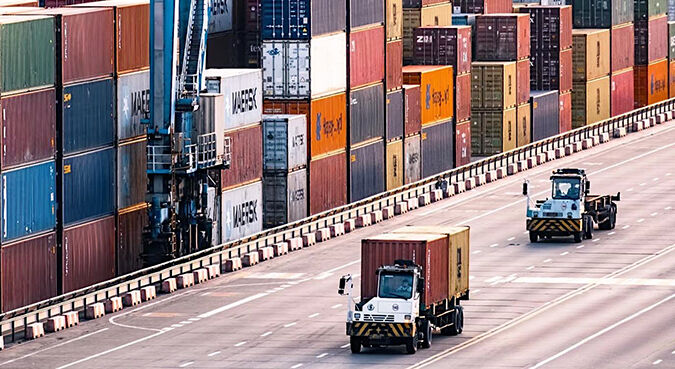
Exporters now design dismantling/loading plans that fit 40HQ containers efficiently, cutting per-unit freight by 15–25% versus conventional loading.
A structured, replicate-the-model blueprint covering sourcing, inspection, logistics, and after-sales.
Direct dealer networks, trade-in programs, and fleet-retirement auctions feed a diversified inventory pipeline that stabilizes supply and pricing.
Nationally certified vehicle surveyors run 58-point mechanical, electrical, and structural checks before any unit enters export inventory.
Standardized refurbishment protocols restore braking, lighting, and bodywork to buyer-specification grades, with photo documentation at each stage.
Exporters prepare certificates of origin, invoices, packing lists, and destination-specific conformity documents tailored to each market.
Port-adjacent warehouses enable container consolidation, LCL/FCL flexibility, and reduced demurrage risk for first-time importers.
How top exporters de-risk market entry through documentation, homologation, and technical support.
Entering a new market with used motorcycle scooters is not only a logistics exercise — it is a regulatory and service-design challenge. Leading China-based exporters now provide localization support that covers three critical layers:
1. Regulatory Compliance: Destination-specific emission standards, vehicle age limits, and import licensing requirements are mapped before shipment. Exporters coordinate with third-party conformity-assessment bodies to issue inspection certificates accepted by customs authorities in the Middle East, Africa, Southeast Asia, and Latin America.
2. Spare Parts & Technical Documentation: Parts catalogs, wiring diagrams, and maintenance schedules are localized into English, French, Spanish, and Arabic, enabling importers to build sustainable service networks.
3. Post-Sale Technical Support: Remote diagnostic support, video-based fault-finding, and technician training programs reduce downtime and protect buyer brand equity. This is the essence of the After-sales Guarantee commitment embedded in top-tier Chinese exporters' operations.

The operational foundation that distinguishes Pixy Automobile in a crowded exporter landscape.
With years of experience, our expertise in managing supply chains has enabled us to build strong relationships with car manufacturers. Our team includes nationally certified vehicle surveyors, seasoned overseas sales managers, and channel managers with decades of industry experience — all dedicated to rigorous pre-sale inspections and comprehensive after-sales technical support.
With a strong emphasis on integrity and exceptional service, Xinxuanyao has earned a reputation as one of the most respected car dealerships in the industry. Our extensive network of partnerships with car dealers spans across over 30 countries, and we extend an invitation for you to join us as our next esteemed partner.
Jining Pixy Automobile Sales Co., Ltd. is the leading supplier of new and used vehicles, situated in the heart of Jining Creative Park. Our expansive 3,000-square-meter showroom is the largest exclusive exhibition hall for electric vehicles, showcasing 120 models and welcoming over 100 groups of overseas clients annually. Additionally, we have five vehicle warehouses nationwide, including ports, with a total inventory of over 1,000 vehicles.
What the next five years of used motorcycle scooter sourcing and export will look like.
AI-assisted image recognition will automate bodywork and tire-wear grading, producing standardized condition reports that buyers can compare across suppliers.
For electric scooters, cloud-based Battery Management System (BMS) data will be exported with each unit, giving importers a verifiable SoH metric at the point of sale.
Trade-finance digitization via escrow smart contracts will shorten payment cycles from 30+ days to under 72 hours, reducing currency and counterparty risk.
Embodied-carbon labels will accompany used scooters, helping importers qualify for green procurement tenders and circular-economy incentives in their home markets.
Looking further ahead, the industry is moving toward closed-loop remanufacturing: retired scooters flow back into certified refurbishment centers, are re-graded to standardized tiers, and re-enter global markets with warranty coverage. China's dense supplier ecosystem and logistics infrastructure position it to lead this model, giving early-adopting importers a durable cost and compliance advantage.
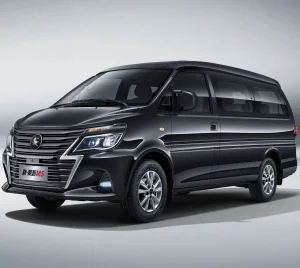
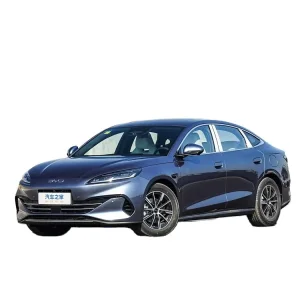
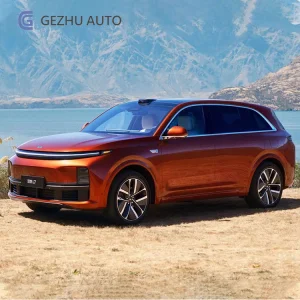
A curated selection from our live inventory — electric minivans, pickups, SUVs, sedans, and sightseeing vehicles.
Direct answers to the questions international buyers ask most about sourcing used scooters and vehicles from China.
MOQs vary by supplier and product mix. Many exporters support LCL consolidation starting from a single 20GP container (typically 20–40 scooters depending on model and dismantling plan), while FCL orders of 40HQ containers offer better per-unit freight economics. Pixy Automobile works with first-time importers on trial orders and scales to full-container programs.
Reputable exporters use nationally certified vehicle surveyors to conduct multi-point inspections covering engine/mechanical condition (or battery SoH for electric models), frame integrity, braking systems, lighting, and cosmetic grading. Buyers receive photo and video documentation at each stage, and third-party inspection services can be commissioned on request.
Southeast Asia (Indonesia, Philippines, Vietnam), Africa (Nigeria, Kenya, Tanzania), the Middle East, and Latin America are the fastest-growing destinations. Central Asia has also become a significant corridor for re-export and domestic distribution. Demand is driven by last-mile delivery growth, urbanization, and price sensitivity.
Standard documentation includes commercial invoice, packing list, certificate of origin, and bill of lading. Destination-specific requirements may include conformity certificates, emission or age-limit declarations, and pre-shipment inspection certificates. Top exporters map these requirements before booking freight to avoid customs delays.
Yes. Leading exporters offer localized spare-parts catalogs, multilingual maintenance manuals, and remote diagnostic support. For electric scooters, battery replacement programs and BMS diagnostic guidance are increasingly standard. After-sales guarantees are a key differentiator among suppliers.
Typical transit times are 7–15 days to Southeast Asia, 18–30 days to the Middle East, 25–40 days to Africa and Latin America, and 10–20 days to Central Asia via rail or road corridors. Exporters with port-adjacent warehouses can consolidate and load faster, reducing total lead time.
Explore our broader selection of sedans, hybrid vehicles, electric cars, and specialty vehicles.
Ask for photo-documented, multi-point inspection reports and third-party verification options before placing orders.
Ensure the exporter maps your destination market's emission, age, and import-licensing rules before shipment booking.
Prioritize suppliers offering spare-parts catalogs, multilingual manuals, and remote diagnostics for long-term fleet uptime.
Use LCL trial shipments to validate quality and logistics before scaling to full-container programs.
 Pixy Car